

Pets didn’t suddenly start needing toys and comfort objects. We simply began seeing them differently.
Not long ago, buying a Christmas gift for a dog felt unusual.
Today, many pets have birthday celebrations, holiday stockings, favorite plush toys, and carefully chosen comfort routines. Across North America, pet owners are spending more on pet toys, dog comfort toys, emotional pet products, and products designed to support companionship and emotional well-being.
At first glance, this may look like a social media trend or modern overindulgence. But something much bigger changed before the gifts appeared.
Many pet owners have witnessed the same curious behavior. A dog may have a basket full of toys, yet always return to the same one. It becomes the toy they sleep beside, carry around the house, and seek out when they are resting or alone. While we often think of toys as simple entertainment, they can sometimes become something more meaningful.
Modern pets did not suddenly become more emotional. Humans simply began changing the role pets play in daily life. And once that role changed, the way we cared for them changed too.
The rise of the pet humanization economy is not really a story about shopping. It is a story about relationships.
Science Suggests Pets May Need Comfort Too
Pets may not ask for comfort the same way humans do, but research suggests they may seek safety, familiarity, and emotional reassurance in surprisingly similar ways.
Psychologists and animal behavior researchers have long observed that dogs can form strong attachment relationships with humans. In many households, pets are not simply companions—they become emotional figures associated with safety, routine, and reassurance. Researchers such as Zilcha-Mano, Mikulincer, and Shaver have discussed how human–pet attachment can resemble emotional attachment dynamics seen in close human relationships.
Research also suggests that dogs may respond positively to familiar, soft, and scent-associated objects. A shelter dog study published in Applied Animal Behaviour Science found that dogs often showed stronger engagement with stuffed toys when familiar scents were involved. Researchers suggested that familiarity itself may provide emotional comfort and environmental enrichment, especially in stressful settings.
Another long-term enrichment study by Wells and Hepper (2000) explored how toys affected shelter dogs. While the immediate behavioral effects appeared limited, the researchers found that enrichment objects could still influence longer-term welfare outcomes, including increased adoption success. Their findings suggest that emotional enrichment may shape confidence, interaction, and environmental engagement in ways that are not always immediately visible.
Researchers have even begun exploring whether dogs can form toy attachments similar to the comfort objects seen in children, such as blankets or teddy bears. The idea is not that pets experience emotions exactly like humans do, but that familiar objects may still help create feelings of routine, reassurance, and emotional stability.
| Researchers have even begun exploring whether dogs can form toy attachments similar to the comfort objects seen in children, such as blankets or teddy bears. The idea is not that pets experience emotions exactly like humans do, but that familiar objects may still help create feelings of routine, reassurance, and emotional stability. | 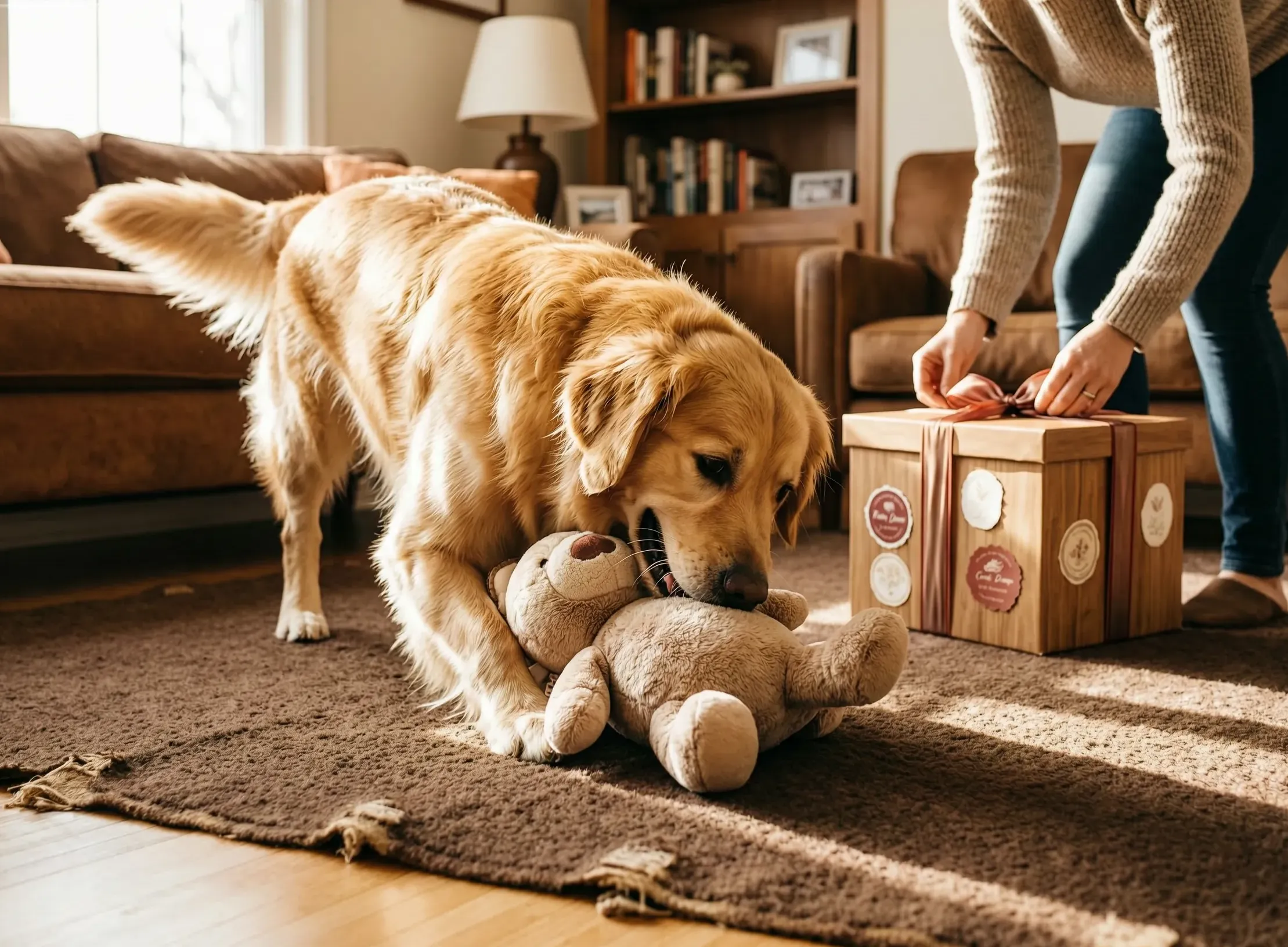 |
Not every dog needs a comfort object, but many pet owners recognize the same pattern: among dozens of toys, one often becomes a favorite source of familiarity and comfort. As awareness around pet anxiety and stress continues to grow, it is easy to understand why more owners are becoming interested in emotional support plush toys and other products designed to provide comfort and companionship.
Modern pet care is no longer only about physical well-being. Increasingly, it is about emotional well-being too.
Society Changed First
Before pets became family members, society itself began changing.
Over the last few decades, modern life has transformed dramatically. People marry later, birth rates have declined, more adults live alone, remote work has increased, and social isolation has become more common. Many people now spend more time indoors, more time online, and less time inside traditional community structures.
Yet emotional needs did not disappear as society changed. People still seek companionship, comfort, routine, and connection. What changed was where many of those emotional needs were directed.
Increasingly, pets became part of that emotional landscape. They did not replace human relationships, but they became deeply integrated into them. For many people, pets are present during daily routines, life transitions, celebrations, stressful periods, and quiet moments at home.
This shift helps explain why modern pet culture looks so different from previous generations. As emotional bonds deepened, people naturally became more interested in their pets’ happiness, comfort, and overall quality of life.
Pets Didn’t Change. Their Place in Our Lives Did.
Thirty years ago, many dogs slept outside. Today, many sleep beside us.
That single image explains the changing role of pets better than any industry report.
Historically, pets often served practical purposes such as guarding homes, hunting, and protecting property. Today, pets are far more likely to be valued for companionship, emotional support, comfort, and family connection. The transition from “pet as animal” to “pet as family member” changed the meaning of pet care entirely.
Once pets became emotionally connected to family life, spending on comfort and emotional well-being began to feel natural rather than excessive. Pet toys and dog comfort toys started being viewed differently. They were no longer seen only as items for play, but also as tools that could support comfort, familiarity, and emotional enrichment.
A favorite plush toy may look insignificant to humans, but for many pets, familiarity itself can carry emotional value. Just as people become attached to certain objects because of the memories and feelings associated with them, pets may also develop preferences for objects that feel familiar and reassuring.
The Rise of the Pet Economy Is About More Than Money
Over the past decade, the North American pet economy has experienced enormous growth.
According to the American Pet Products Association (APPA), U.S. pet industry spending has risen dramatically in recent years, reaching well over $150 billion annually. On the surface, this looks like a story about consumer spending. In reality, it reflects something much deeper.
| According to the American Pet Products Association (APPA), U.S. pet industry spending has risen dramatically in recent years, reaching well over $150 billion annually. On the surface, this looks like a story about consumer spending. In reality, it reflects something much deeper. | 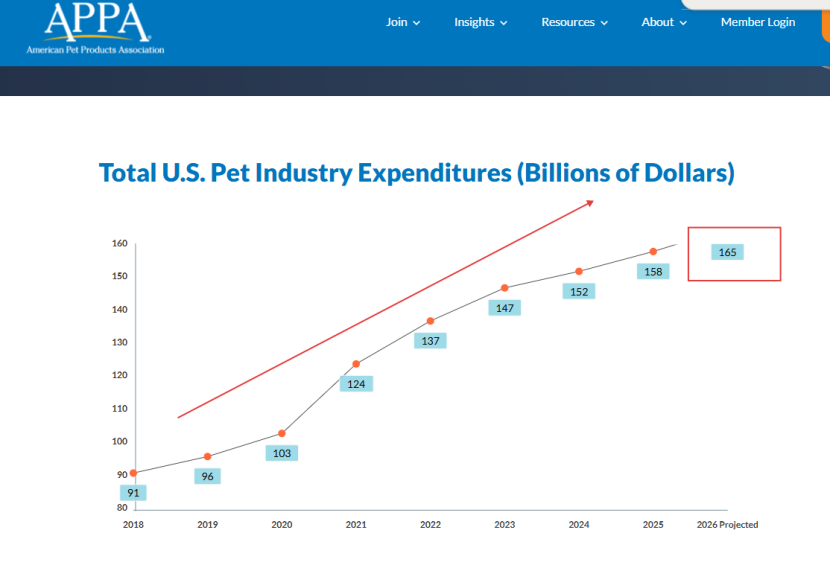 |
Pets did not suddenly start requiring twice as much food or veterinary care. Instead, people began investing in a broader vision of pet well-being. As pets became more integrated into family life, spending expanded beyond survival needs and into emotional experiences, lifestyle products, and comfort-focused care.
The growth of the pet humanization economy reflects a larger cultural shift. Modern pet owners are no longer only asking whether their pets are healthy. They are increasingly asking whether their pets feel comfortable, secure, stimulated, and emotionally fulfilled.
Viewed through that lens, pet economy growth is not simply about money. It is evidence of how profoundly the relationship between humans and pets has evolved.
We Don’t Just Care About Pets’ Survival Anymore
One of the clearest signs of this evolution is that modern pet care increasingly focuses on emotional well-being rather than simple survival.
Today, discussions around pet anxiety and stress are far more common than they were a generation ago. Owners pay closer attention to signs of boredom, loneliness, separation anxiety, and emotional stimulation because they recognize that quality of life includes more than physical health.
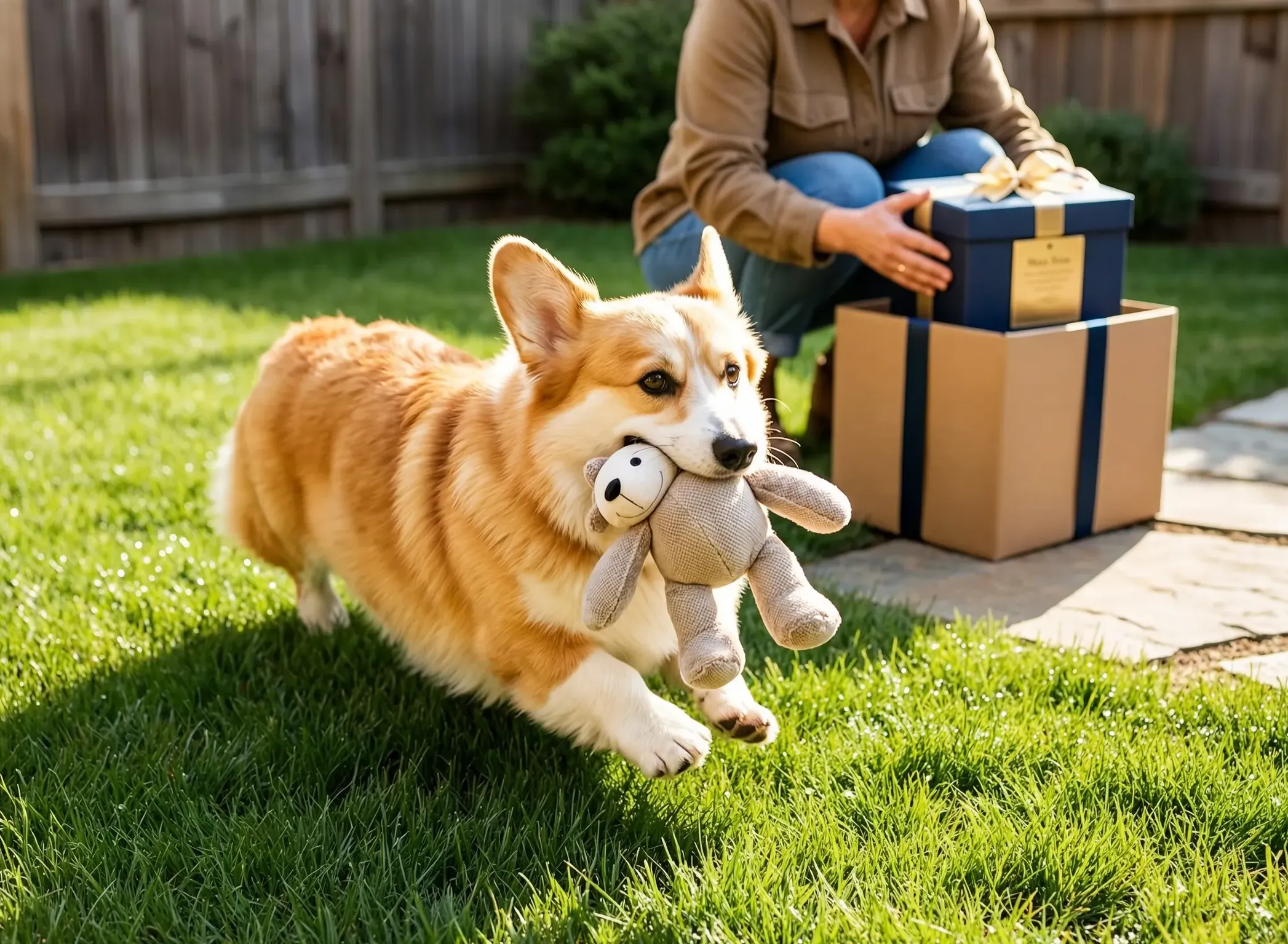 |
Today, discussions around pet anxiety and stress are far more common than they were a generation ago. Owners pay closer attention to signs of boredom, loneliness, separation anxiety, and emotional stimulation because they recognize that quality of life includes more than physical health. |
This is why emotional pet products and pet lifestyle products have become increasingly common. Whether it is a comfort toy, a calming product, or a familiar plush companion, these items often represent something larger than the product itself. They reflect a desire to create safety, routine, companionship, and emotional stability for animals that are deeply loved.
Not every form of care is about survival. Some forms of care are about emotional comfort.
And as pets become increasingly recognized as family members, emotional care naturally becomes part of responsible pet ownership.
Maybe Gifts Were Never About Objects
At their core, gifts have never really been about objects.
They are expressions of emotional connection.
Children receive teddy bears. Families exchange holiday gifts. People hold onto meaningful objects because they represent comfort, memory, and affection. Today, pets are increasingly included in those same emotional rituals.
That is why many modern pet owners buy thoughtful gifts, comfort toys, and plush companions for their pets. Not simply because the products are cute, but because they symbolize care, companionship, and emotional bonding.
The rise of the pet humanization economy ultimately reflects something much larger than shopping trends. It reflects how deeply pets have entered human emotional life.
Pets didn’t suddenly start needing toys and comfort objects.
We simply began seeing them differently.
And once someone becomes family, giving becomes a natural expression of love.
Maybe that’s why so many pets eventually end up with one special plush toy of their own—not because they need more things, but because comfort, familiarity, and companionship matter to them too.🐾