
Blue is the diaphanous mountains of Cang Shan,White is the shimmering silver waves of the Erhai Sea.More than a thousand years ago, when the swaying Panchgan on Cang Mountain met and dissolved with the water of the Erhai Sea at the foot of the mountain.A pool of indigo blue, dipped into a blue and white impression of the mountains and rivers, transformed into the traditional tie-dye of white flowers on a blue background.

When we walk into nature, we will find that it is colorful.More than a thousand years ago, there was no industry. Our ancestors, extracting colors from nature, made artificial synthesis to form a piece of fabric with patterns and colors.
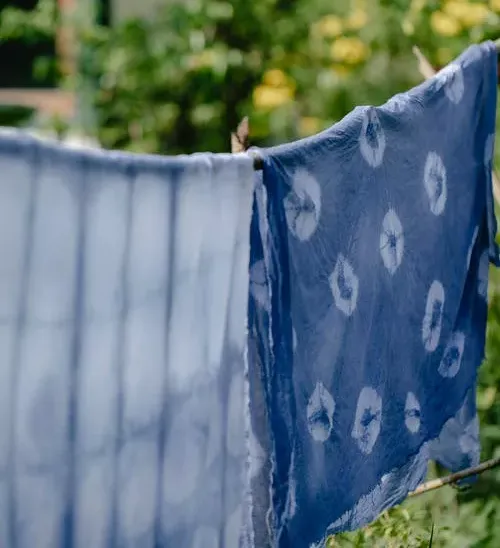
In ancient times, dyeing grasses mainly consisted of organic substances extracted from the roots, stems, leaves, flowers and fruits of plants such as bluegrass (blue) and cedar (red) that can color fibers and other materials.Red cabbage (lavender), pomegranate husk (yellowish), etc. They are not only edible vegetables and fruits, but also stains from which dyes can be extracted. There are many other similar plants in nature, too numerous to mention.
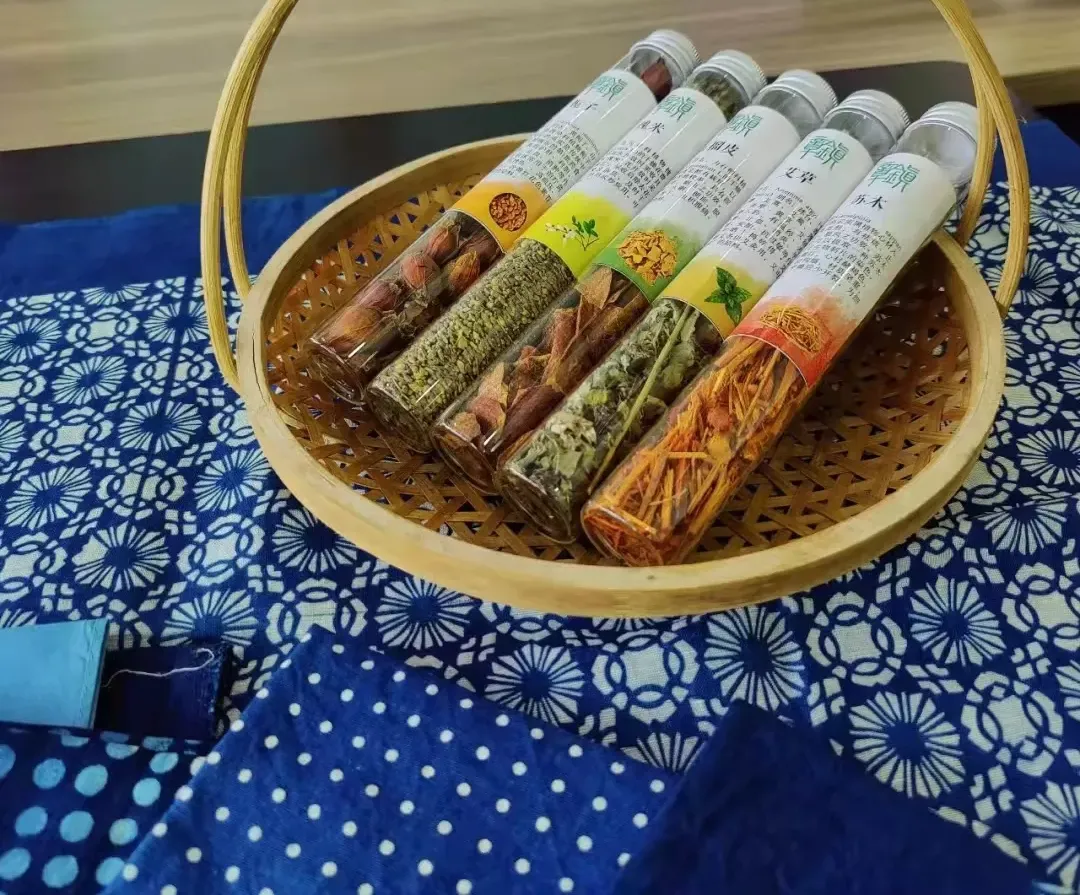
When we use vegetable-dyed cloth, we are taking in more than just its pigments.Each dyeable plant carries its own slightly unique aroma, and unlike industrially dyed cloth, some plants can play a protective role, such as gardenia dyed cloth can inhibit bacteria, while some plants can resist the UV of the sun, and some can play a healing role on the body, such as Panax quinquefolium and Triple Seven.Panax quinquefolium has the effects of clearing heat and detoxifying, cooling the blood and improving the throat; Triple Seven has the effects of stopping bleeding, dispersing blood stasis, reducing swelling and fixing pain.Their effectiveness is amazing, and not just in medicine.Through a dozen processes, organic substances that color fibers and other materials are extracted and made into dyed cloth, leaving a faint, unique smell that has a healing effect on the body.These are things that modern industry has no way to replace.The products that come from plant dyeing techniques are not only back to nature, but also very beneficial to human health.
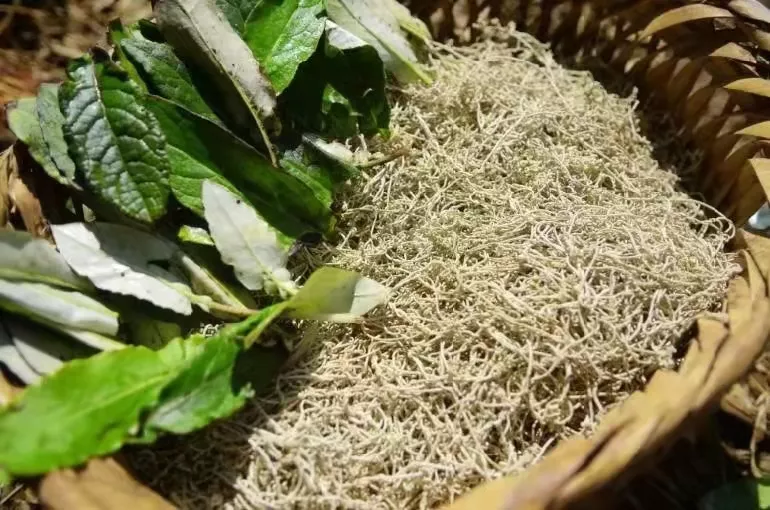
There is a world of difference between industrial dyes and vegetable dyes for the environment and human health.Industrial dyestuffs, of which there are many types, bring colorful colors to people's lives and generate great economic benefits, but they also produce large amounts of dye wastewater that is discharged into environmental water bodies, leading to pollution of natural water bodies.For example, heavy metal salts such as chromium, lead, mercury, arsenic, zinc and other heavy metal wastewater present in dyes are not biodegradable; they can persist in the natural environment and are continuously transmitted through the food chain and accumulate in the human body.In Japan, there was a public hazard such as "Minamata disease" caused by heavy metal mercury and Fukushima pollution.Plant dyes are ancient dyes, which are extracted from plant pigments through a dozen or so processes, gradually forming a gorgeous color.Its discharge of dye wastewater, not only will not cause harm to the environment, human health, dyeing cloth for human health and benefits.Plant dyes not only return to nature, respect nature, conform to nature and protect nature, but also are the inheritance of environmental protection concept. In today's society, under the environment of pursuing environmental protection and high quality fabrics, plant dyeing is an inevitable choice.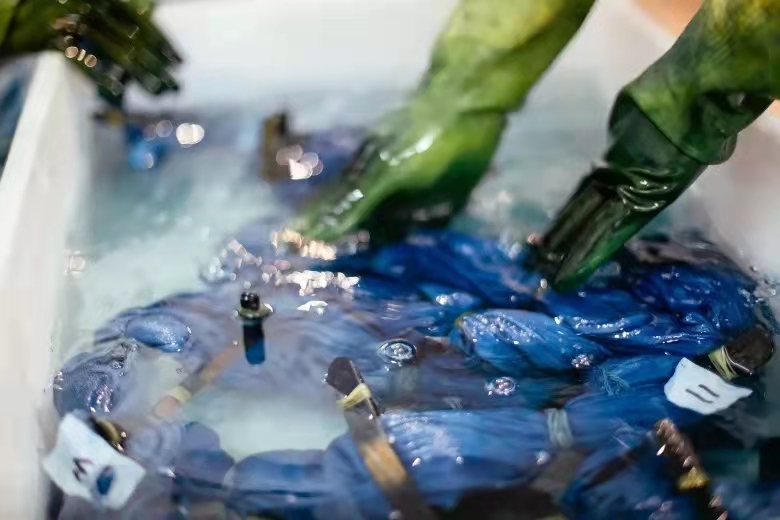
The products resulting from vegetable dyeing techniques are both green and environmentally friendly, and cannot be replaced by industrial dyes.Although industrial dyes bring great economic benefits, the damage to the environment is also unimaginable.As the quality of the environment declines and various kinds of pollution lead to public accidents, human beings need to continue to survive and must explore a path of environmental protection and sustainable development.
More than a thousand years ago, the ancient method of dyeing - vegetable dyeing - appeared.Looking deeper into history, more than a thousand years ago, there was no industrial dye effluent, but only vegetable dye effluent, and without any concept of effluent treatment, the environment and human health suffered no damage.As you can see, plant dyes - a gift from nature - are friendly to nature and beneficial to the human body.Ancient dyes, organic substances that can color fibers and other materials, are extracted from vegetables, fruits, herbs and other plants, and through more than a dozen processes, they are then used to form dyed fabrics with color. Plant dyes, from nature, back to nature.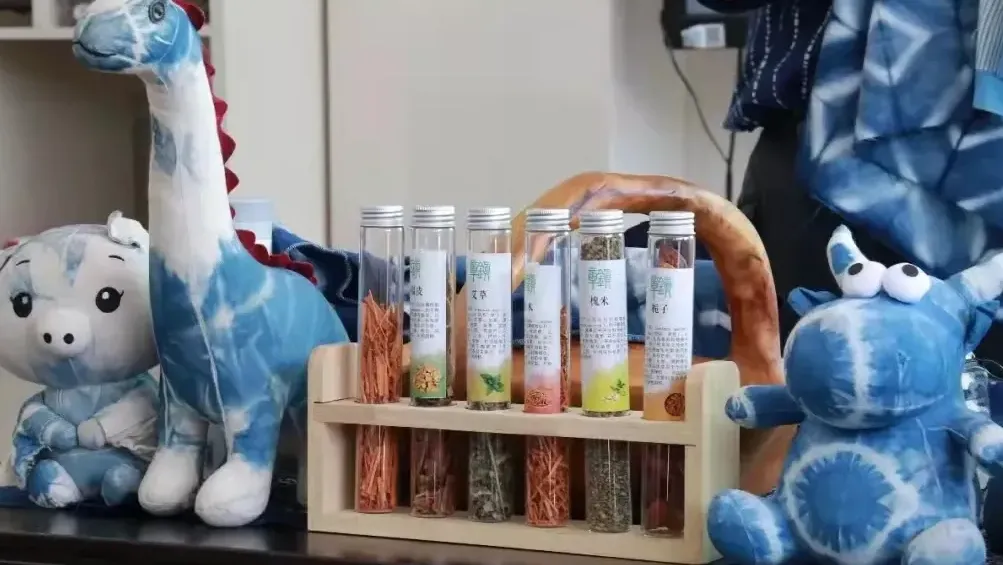
The process of vegetable dyes is tedious and very long, and the economic benefits are not as great as those of industrial dyes, but in the long run, the development and use of vegetable dyes is a sustainable path.The protection of the environment lies not only in one country, but also in the whole world. The inheritance of plant dyeing skills should not only be propagated at home, but also go out of the country.
Nature's resources are not inexhaustible.However, vegetables, fruits, herbs and other plants have always been cultivated artificially, and scientific improvements are constantly being made to increase yields, and there is no such thing as running out of raw materials for pigment extraction.Moreover, it can also increase the income of farmers, not because some vegetables and fruits are produced too much and the market is saturated, resulting in ultra-low prices, or even left to rot on the vegetable garden or orchard, not even the cost of a year's input can not be recovered.
Botanical dyeing is not only a technique that incorporates the concepts of green, environmental protection and sustainability, but also the purest, most natural and brightest colors.